New 2026 Study Proves Body Recomposition Works: Build Muscle in a Mild Caloric Deficit
At IncreaseMyT, we specialize in helping driven men and women optimize their hormones, recovery, and long-term performance. Many of our clients train hard consistently while balancing careers, families, and life. They want real, sustainable progress — not the rollercoaster of traditional bulking and cutting.
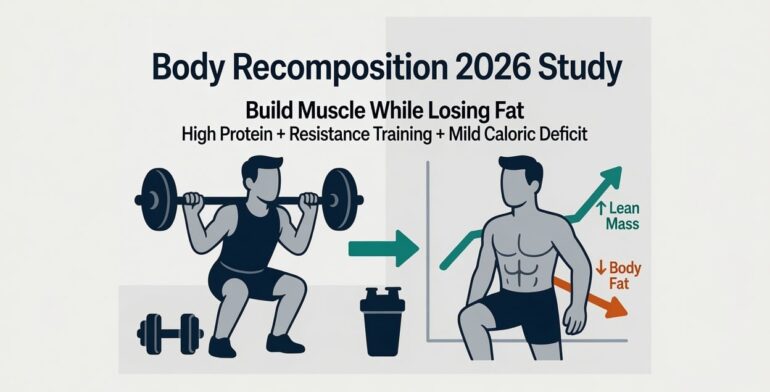
A landmark 2026 study has provided strong new evidence that challenges the old “bulk or cut only” dogma. Published in the European Journal of Applied Physiology, researchers led by Salvador Vargas-Molina demonstrated that resistance-trained individuals can simultaneously build muscle and lose fat through body recomposition (often called “recomp”) — even in a mild caloric deficit.
This research reinforces what many evidence-based coaches have observed for years: the tortoise often wins the race. Slow, steady, strategic progress beats aggressive cycles that risk muscle loss, hormonal disruption, and metabolic slowdown.
The Old Paradigm: Bulk or Cut — Why It’s Often Suboptimal
For decades, the fitness industry promoted a binary approach: eat in a surplus to build muscle (“bulk”), then create a large deficit to lose fat (“cut”). While this can work for some advanced bodybuilders with perfect genetics and support systems, it frequently falls short for most people — especially natural lifters, busy professionals, and those over 30.
Problems with traditional bulk/cut cycles include:
- Muscle loss during cuts is common and hard to reverse. Aggressive deficits (500+ kcal) combined with insufficient protein or training volume often lead to loss of hard-earned muscle. Regaining that muscle later requires another surplus phase and can take significant time and effort.
- Metabolic and hormonal adaptations. Large deficits can lower testosterone, thyroid function, and resting metabolic rate, making future fat loss harder and increasing rebound risk.
- Psychological and adherence challenges. Extreme bulking often leads to excessive fat gain and discomfort; aggressive cutting leads to fatigue, cravings, and burnout.
- Yo-yo effect. Many people end up spinning their wheels — gaining fat easily during bulks and struggling to hold onto muscle during cuts.
The result? Slower long-term progress and frustration for the average dedicated trainee.
The 2026 Vargas-Molina Study: Clear Evidence for Body Recomposition
In this randomized controlled trial, 30 resistance-trained young adults (26 men, 4 women; average age ~23, ~1.5 years training experience, starting body weight ~80 kg, BMI ~26.3 with moderate body fat around 25%) were assigned to one of three groups for 10 weeks:
- ISO (Isocaloric/Maintenance): High-protein diet at estimated maintenance calories (~2,566 kcal/day, ~2.5 g protein/kg body weight).
- DEF (Mild Deficit): Same high protein intake but ~250 kcal below maintenance (~2,262 kcal/day).
- Control: Habitual diet with no nutritional supervision.
All participants followed the same progressive 4-day-per-week resistance training program (supervised for the ISO and DEF groups). Body composition was measured via DXA.
Key Results:
- Both the maintenance (ISO) and mild deficit (DEF) groups gained significant fat-free mass: +0.97 kg in ISO and +1.04 kg in DEF.
- When adjusted for fat-free adipose tissue, gains were even more impressive: +1.22 kg (ISO) and +1.50 kg (DEF).
- The mild deficit group lost substantially more fat: -2.94 kg vs. -1.41 kg (trend) in the maintenance group.
- The control group showed essentially no meaningful changes in body composition.
Both high-protein groups achieved true body recomposition — gaining muscle while losing fat — outperforming the unsupervised control. The mild deficit group actually achieved slightly better overall body composition improvements.
Why did this work? High protein intake (~2.5 g/kg) supports muscle protein synthesis, increases satiety, and has a higher thermic effect. Progressive resistance training provides the stimulus for growth. A mild deficit (or even maintenance) avoids the severe catabolic environment of aggressive cuts. Participants had moderate starting body fat, which favors recomp compared to very lean individuals.
Why Recomposition Is Often Better Suited for Most People
The study adds to growing evidence that you don’t need a large surplus to build muscle or a large deficit to lose fat — especially when protein is high and training is optimized. For many, recomp is superior because:
- Muscle is precious and hard to regain. Once lost during an aggressive cut, rebuilding it often requires another bulk phase. Recomp lets you improve body composition without that setback.
- Better hormonal environment. Mild deficits or maintenance phases are generally more supportive of testosterone and overall recovery compared to prolonged large deficits.
- Superior long-term adherence and sustainability. Smaller, consistent changes are easier to maintain than extreme swings in weight and calories.
- Steady compounding progress (the tortoise wins). Small weekly improvements in muscle and fat loss add up dramatically over months and years without the metabolic or psychological costs of yo-yo dieting.
In short, recomp plays the long game. It prioritizes building (or at least preserving) the metabolically active tissue that supports hormones, metabolism, strength, and longevity.
Amplifying Your Recomp with Targeted Peptide Protocols at IncreaseMyT
The 2026 study highlights the power of high protein intake combined with consistent resistance training for body recomposition. At IncreaseMyT, we see even stronger, faster, and more sustainable results when these fundamentals are amplified with personalized peptide protocols under medical supervision.
The right peptide program supports recomp by:
- Enhancing recovery and training consistency — Allowing you to train harder and more frequently without excessive soreness or injury risk, which directly supports the progressive overload seen in the study.
- Boosting anabolic signaling and muscle preservation/growth — Growth hormone axis peptides help maintain or increase lean mass even during mild deficits by supporting IGF-1 pathways and nutrient partitioning.
- Improving fat metabolism and visceral fat loss — Certain peptides aid lipolysis and better body composition shifts beyond what diet and training alone achieve.
- Reducing inflammation and supporting nerve/joint health — Critical for active adults over 30 who train daily, helping sustain long-term progress without setbacks.
- Optimizing sleep and overall recovery — Deeper sleep enhances hormonal balance and muscle repair, compounding the benefits of high-protein recomp protocols.
Common synergistic approaches at IncreaseMyT include GH-stimulating peptides (such as Sermorelin or Hexarelin stacks) combined with TRT for amplified body composition changes, recovery-focused peptides like Cibinetide (ARA-290) for inflammation and nerve support, or targeted stacks with agents like Tirzepatide for enhanced fat loss while preserving muscle.
These are not magic bullets — they work best layered on top of the evidence-based foundations from the study (high protein ~2–2.5 g/kg, progressive resistance training, and a mild caloric deficit or maintenance when appropriate).
Matching Protocols for Different Participants
For busy professionals and men over 30 (like the 44-year-old CEO example in our client results): TRT combined with GH peptides delivers superior lean mass gains and fat loss while supporting energy and recovery for consistent training.
→ Read: TRT and GH Peptides: The Ultimate Synergy for Explosive Gains
For active adults focused on recovery, inflammation, and nerve health (especially those training daily over 30): Our preferred advanced recovery stack using Cibinetide + Timbetasin acetate supports deeper tissue repair and long-term resilience.
→ Explore our peptides resources, including Cibinetide (ARA-290) for inflammation relief
For those prioritizing visceral fat loss and lean gains alongside training: Stacks involving Tesamorelin + TRT + Tirzepatide have shown impressive client outcomes for body recomposition.
→ See: Tesamorelin + TRT + Tirzepatide Real Client Results
For overall TRT optimization with recomp goals: Integrating peptide stacks enhances the hormonal foundation for sustained muscle building and fat loss.
→ Read: 2025 TRT Breakthroughs: Peptide Stacks and Prescription Growth Hormone with TRT
For resistance training-focused recomp: Tirzepatide protocols paired with TRT support building muscle while losing fat.
→ Explore Tirzepatide as the Recomp King and TRT + Tirzepatide stacks
Real-World Examples of Recomp Success
Example 1: The Busy Professional (Age 38)
A client at IncreaseMyT with moderate body fat trained 4x/week with weights while managing a demanding job and family. Instead of a traditional cut, he followed a mild deficit (~250-300 kcal) with high protein (~2.2-2.5 g/kg) and progressive training, supported by optimized peptide protocols. Over 4-5 months, he lost ~8-10 lbs of fat while gaining noticeable muscle and strength. Energy stayed high, sleep improved, and labs showed stable or improved markers.
Example 2: The Natural Lifter Avoiding the Yo-Yo
A 32-year-old natural trainee had previously done multiple bulk/cut cycles, gaining fat easily during surpluses and losing strength/muscle during aggressive cuts. Switching to a recomp-focused approach (maintenance or mild deficit phases with high protein, consistent training, and supportive peptide optimization) allowed steady improvements in leanness and muscle over 12+ months without the frustration of repeated muscle loss.
Example 3: Women and Moderate Body Fat Individuals
Research and real-world application show women and those with higher starting body fat often respond particularly well to recomp strategies. The mild deficit + high protein + lifting approach (amplified by appropriate peptide support where indicated) supports fat loss while building or maintaining muscle — key for metabolic health and physique goals without extreme restriction.
Example 4: Long-Term “Tortoise” Approach
Someone who recomp’s steadily for 1-2 years (with foundational nutrition/training plus targeted optimization like peptides where beneficial) can end up with significantly better body composition, higher muscle mass, and better metabolic health than someone who cycles through aggressive bulks and cuts. The consistent stimulus and better recovery compound over time.
How to Apply Recomposition Principles Practically
Based on the study and supporting evidence:
- Protein: Aim for 2.0–2.5 g per kg of body weight (or target body weight) daily — consistent with the successful protocols.
- Calories: Start at maintenance or a mild deficit (200–300 kcal below estimated maintenance) if fat loss is a priority. Track and adjust based on progress.
- Training: Progressive resistance training 3–5 days per week with sufficient volume and intensity (the study used 4 days).
- Patience and tracking: Measure progress with photos, measurements, strength logs, and how clothes fit — not just the scale. Expect noticeable changes over 8–16+ weeks.
- Support recovery: Prioritize sleep, stress management, and overall nutrition. At IncreaseMyT, we often integrate hormone optimization and targeted peptide protocols when appropriate for even better results.
Recomposition works best for those with moderate body fat, decent training experience, and consistent habits. Very lean or highly advanced individuals may need more precise surplus phases for maximal muscle gain.
The IncreaseMyT Approach: Sustainable Optimization
We help clients build protocols that support both performance and long-term health. Body recomposition aligns perfectly with our philosophy: strategic nutrition and training that enhance (rather than fight) your physiology, often amplified by personalized peptide and hormone optimization. Whether through nutrition guidance, peptide-supported recovery, or comprehensive hormone optimization, the goal is the same — consistent progress you can sustain for years.
The 2026 study is a powerful reminder that you don’t have to choose between building muscle and losing fat in an all-or-nothing way. With the right approach — high protein, smart training, patience, and targeted optimization — you can improve your body composition steadily and effectively.
Ready to implement a smarter, more sustainable strategy tailored to your goals, labs, and lifestyle? Contact IncreaseMyT for a consultation. Our team can help design a recomp-focused plan (or hybrid approach with peptide support) that fits your training demands and optimization needs.
Results vary by individual factors including training status, starting body composition, adherence, sleep, stress, and hormonal health. Peptide and hormone protocols require medical supervision, proper sourcing, and monitoring. This article is for informational purposes only and is not medical, nutritional, or training advice. Always consult qualified healthcare and fitness professionals before making significant changes to your diet, exercise, or supplementation routine.
Key Reference: Vargas-Molina S, et al. Comparison of two nutritional protocols in body re-composition of resistance-trained participants. Eur J Appl Physiol. 2026.
Intake Forms