BPC-157 vs Cibinetide (ARA-290): Which Peptide Better Supports Long-Term Muscle Recovery?
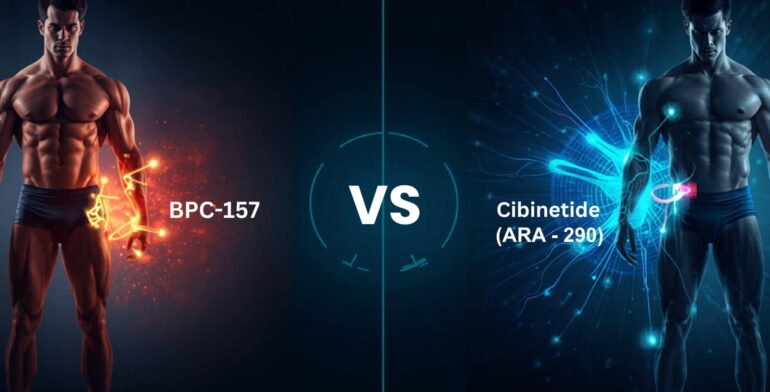
BPC-157 and cibinetide (also known as ARA-290) are two research peptides studied for their ability to modulate inflammation and promote tissue repair. While both show promise in preclinical and early clinical models, they work through distinct mechanisms that influence how they affect acute injury healing versus long-term preventative strategies, particularly in the context of muscle recovery where controlled inflammation plays a key role in adaptation and growth.
At IncreaseMyT, we focus on evidence-based peptide protocols that complement testosterone optimization, training, and recovery to help men achieve sustainable performance and health gains through licensed medical channels.
How BPC-157 Reduces Inflammation: Potent but Site-Focused Repair
BPC-157, when administered via distant systemic injection (such as subcutaneous in the abdomen), circulates throughout the body yet still produces pronounced localized reduction in inflammation at specific injury or damaged sites because its pleiotropic mechanisms—such as balancing nitric oxide signaling, upregulating VEGF and growth factors, downregulating pro-inflammatory cytokines (TNF-α, IL-6), and shifting macrophages from pro-inflammatory M1 to reparative M2 phenotypes—are context-dependent and preferentially engage in tissues under stress or injury, where repair pathways are already activated, effectively amplifying healing and resolving excessive inflammation precisely where needed without broadly suppressing it elsewhere.
While this makes BPC-157 highly effective for acute injury recovery and reducing excessive inflammation that can delay healing, its stronger dampening of inflammatory pathways raises considerations for athletes and bodybuilders. Some inflammation is essential for muscle repair and hypertrophy, as it recruits immune cells, stimulates satellite cell activation, and drives anabolic signaling after resistance training. Overly aggressive reduction could potentially limit these adaptive responses in long-term training cycles.
Cibinetide (ARA-290): A More Preventative, Balanced Anti-Inflammatory Approach
In contrast, cibinetide (ARA-290), when given systemically (typically via subcutaneous injection), circulates and reduces inflammation more directly through selective activation of the innate repair receptor (IRR) — a heterocomplex (EPOR/β-common receptor or CD131) that is upregulated primarily on cells in response to tissue injury, hypoxia, metabolic stress, or inflammation. Once in the bloodstream, cibinetide binds this receptor on immune cells (especially myeloid cells like macrophages and microglia), endothelial cells, and other stressed tissues, triggering intracellular signaling (e.g., JAK/STAT, PI3K/Akt, and inhibition of NF-κB p65) that dampens innate immune overactivation, suppresses production and systemic release of pro-inflammatory cytokines (TNF-α, IL-1β, IL-6, IL-12/IL-23), reduces chemokine-driven cell infiltration, lowers oxidative stress and nitric oxide overproduction, and promotes anti-inflammatory shifts and cell survival. This leads to both targeted anti-inflammatory effects at injury sites (where IRR expression is highest) and broader systemic modulation of inflammation, as seen in reduced circulating cytokine levels and improved outcomes in models of widespread conditions like diabetic complications, neuropathy, colitis, and autoimmune diseases, without broadly impairing overall immunity or stimulating red blood cell production.
Cibinetide also effectively reduces inflammation at nerve endings, which is particularly beneficial for pain reduction in conditions such as sciatica and other neuropathic pain states. By inhibiting NLRP3 inflammasome activation in Schwann cells after sciatic nerve injury and suppressing microglial activation in the spinal cord, it provides rapid and long-lasting relief from mechanical and cold allodynia while supporting nerve repair and regeneration—offering a disease-modifying effect rather than simple symptom masking.
Unlike BPC-157’s more direct and sometimes robust suppression at injury sites, cibinetide’s mechanism is inherently context-dependent and preventative. It protects tissues from excessive inflammatory damage before or during stress, supports cell survival and nerve/muscle integrity, and promotes a reparative environment. This gentler modulation may better preserve the acute inflammatory signals required for muscle protein synthesis and hypertrophy during consistent training.
Key Differences and Implications for Muscle Recovery
Mechanism & Inflammation Control: BPC-157 offers multifaceted, regenerative anti-inflammatory effects tightly linked to angiogenesis and tissue rebuilding, ideal for resolving existing damage. Cibinetide provides targeted IRR-mediated immune modulation that prevents over-inflammation while supporting repair, potentially offering a safer profile for ongoing use.
Acute vs. Long-Term Use: BPC-157 shines for faster recovery from specific injuries but may overly dampen inflammation needed for muscle adaptation. Cibinetide appears more preventative, helping maintain tissue resilience and metabolic health over time without interfering as much with training-induced inflammatory cues essential for growth.
Muscle Recovery Potential: By not suppressing inflammation excessively, cibinetide may better support the full cycle of muscle damage, repair, and supercompensation—key for hypertrophy—while still reducing chronic or pathological inflammation that hinders progress. Its additional benefits on nerve-ending inflammation further aid overall recovery and pain management in active individuals.
Both peptides remain investigational and are not FDA-approved for these indications. Human data are limited, especially head-to-head comparisons, and most evidence comes from animal models and early clinical trials.
Clinical Take-Home Messages
- BPC-157 provides strong localized repair and inflammation reduction effective even with systemic dosing, making it valuable for acute injury support.
- Cibinetide (ARA-290) offers a more balanced, preventative modulation via the innate repair receptor, potentially better suited for long-term use in active individuals, with added benefits for neuropathic pain including sciatica through nerve-ending inflammation reduction.
- For muscle recovery, preserving some training-induced inflammation is important; cibinetide’s gentler approach may support hypertrophy better without excessive blunting.
- Peptide therapy should only be used under physician supervision with pharmaceutical-grade sources from licensed 503A compounding pharmacies.
- Combine with proper training, nutrition, testosterone optimization, and monitoring for best results and safety.
Your Next Step at IncreaseMyT
At IncreaseMyT, we integrate the latest peptide research—including BPC-157 and cibinetide—with personalized testosterone replacement therapy (TRT), nutrition coaching, and lab monitoring. Our protocols use only regulated, pharmacy-compounded peptides under medical oversight to prioritize safety and long-term performance.
Founder Todd and our team help men optimize recovery, preserve muscle gains, reduce chronic inflammation, and train sustainably. Contact us to discuss whether BPC-157, cibinetide, or a tailored combination aligns with your goals.
Intake Forms