Why Daily Long-Ester Testosterone Injections Are Often Pointless – Twice Weekly Is Usually Superior
Many men on Testosterone Replacement Therapy (TRT) believe daily injections are necessary to achieve perfectly stable levels with long-ester testosterone (such as cypionate or enanthate). In reality, daily long-ester testosterone injections are often pointless for most people. Given the 7–10 day half-life of these esters, injecting every day is usually unnecessary, adds extra hassle, and can lead to downsides like excessive suppression of sex hormone-binding globulin (SHBG).
Twice-weekly subcutaneous injections (every 3.5 days) provide a much better balance: they deliver stable testosterone levels with only minor, natural-like fluctuations, avoid significant estradiol (E2) spikes, and help preserve healthier SHBG levels.
Healthy men already experience natural daily variation in testosterone—peaking in the morning and dropping 20–35% by afternoon—yet these fluctuations support energy cycles, mood, and overall hormone balance without causing problems.
Understanding Natural Testosterone Fluctuations
Testosterone follows a natural diurnal rhythm in healthy men: levels are highest in the early morning and decline 20–35% by afternoon in younger individuals (with the drop becoming less pronounced in older men). This variation is a normal physiological feature and actually supports daily energy, mood regulation, and hormone balance—not something that needs to be completely eliminated.
Studies confirm these daily drops are expected and harmless unless overall morning levels remain persistently low. Attempting to flatten levels entirely with ultra-frequent injections often ignores this natural biology.
- Diurnal variation details: PMC article on daily T changes
Why Twice-Weekly Subcutaneous Injections Provide Excellent Stability
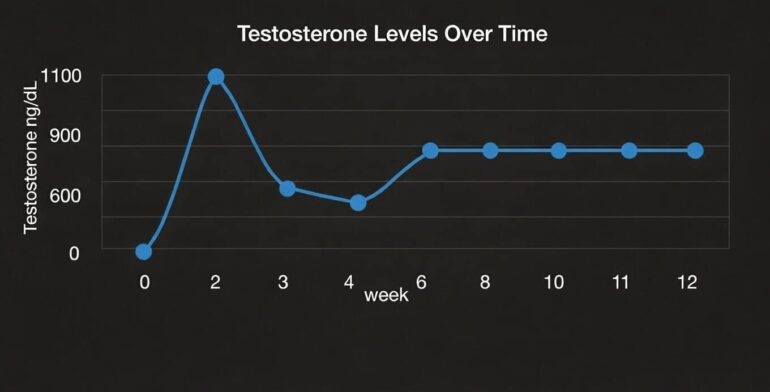
Long-ester testosterone releases slowly over days, so splitting your weekly dose into two subcutaneous (SC) injections creates a smooth pharmacokinetic profile with small peak-to-trough ratios (around 1.8). Serum levels remain consistent throughout the week, with fluctuations that feel natural and avoid the large swings seen with less frequent dosing.
Research shows that weekly SC testosterone stabilizes physiologic levels with minimal variation in estradiol (E2), and the subcutaneous route often results in lower overall E2 compared to intramuscular injections due to steadier absorption. Twice-weekly dosing is widely recommended in clinical practice for reliable, symptom-free TRT.
- SC TE pharmacokinetics: SC TE stability study
- Lower E2 with SC: SC vs IM comparison
- Twice-weekly benefits: Twice-weekly advantages
The Risks of Over-Suppressing SHBG with Frequent Dosing
Daily injections of long-ester testosterone create constant androgen exposure, which can suppress SHBG more than necessary. SHBG acts as a natural regulator of free testosterone; when levels drop too low, free T can rise sharply, potentially increasing risks such as higher aromatization to estradiol, insulin resistance, or other metabolic issues.
Low SHBG is strongly linked to type 2 diabetes—diabetics frequently have reduced SHBG due to insulin resistance and metabolic syndrome. More frequent dosing can worsen this suppression without providing any meaningful stability advantage over twice-weekly protocols.
- SHBG and diabetes link: SHBG and diabetes study
- Metabolic associations: SHBG in metabolic health
Why Twice-Weekly Optimization Outperforms Daily for Most Men
Twice-weekly subcutaneous dosing strikes the ideal balance: dependable hormone levels, fewer injections, better SHBG preservation, and lower risk of unnecessary side effects—all supported by pharmacokinetics and real-world clinical experience. It closely mimics natural rhythms while effectively achieving high-normal testosterone.
At IncreaseMyT, we focus on evidence-based, closely monitored protocols tailored to your labs and lifestyle for the best long-term results.
Daily vs. Twice-Weekly Long-Ester TRT Comparison
Ready to Simplify Your TRT Protocol?
If daily injections feel excessive or are causing issues like low SHBG or other side effects, switching to twice-weekly subcutaneous dosing could give you better results with far less effort. Many men achieve stable, high-normal levels without the daily routine.
Contact IncreaseMyT today for personalized testing, bloodwork review, and optimized TRT guidance.
Always consult your physician before changing TRT frequency or protocols. This article is for informational purposes only and not medical advice. Results vary with professional monitoring.