
Physical Symptoms of Low Testosterone
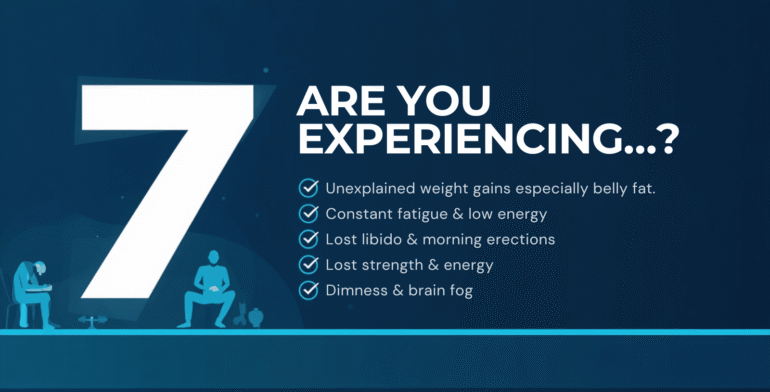
Fatigue, stubborn belly fat, muscle loss, low libido, brain fog, joint pain, hair loss — these are the classic physical symptoms of low testosterone that millions of men battle every day. But what happens when TRT, diet, and training don’t fully fix them? The answer lies deeper than your T levels.
The seven Keys below reveal why these symptoms often persist — and what’s really driving them.
Key 1: Anything Can Cause Anything
Your chronic fatigue and muscle weakness might not be from low T at all — they can be triggered by chronic inflammation, unresolved grief, heavy metal toxicity, mold exposure, or even a decades-old neck injury disrupting vagus nerve signaling. The body doesn’t care about lab ranges; it only responds to the strongest underlying stressor. Until that root stressor is removed, testosterone (natural or injected) will always be fighting an uphill battle.
Key 2: For Every Action There Is a Reaction (Often Unequal)
Raising testosterone with injections can improve morning wood and energy for 4–6 weeks — then everything plateaus or gets worse. Why? Because the body reacts automatically through the autonomic nervous system. If you’re stuck in a chronic “fight-or-flight” state (high cortisol, high adrenaline), your cells down-regulate androgen receptors as a protective mechanism. The reaction isn’t equal and opposite — it’s adaptive and often suppresses the very symptom relief you’re chasing.
Key 3: Everything Works… Sometimes
Clomid restarts natural production in some men but causes mood swings in others. HCG preserves fertility for one guy but triggers estrogen spikes and bloating in the next. Carnivore fixes libido for 30% of men but tanks it for another 30%. Tongkat Ali, heavy squats, ice baths — everything has a success rate, but never 100%. That’s because each protocol only works when it matches the exact hidden cause in that individual.
Key 4: There Are No Panaceas
There is no magic dose of testosterone, no perfect peptide stack, no universal diet that fixes every man’s low-T symptoms. The man whose belly fat and erectile dysfunction come from glyphosate disrupting his gut microbiome will never fix it with more testosterone. The man whose low energy stems from childhood trauma stored in the limbic system won’t lift his way out of it. One cause → one cure is a myth when multiple realms (physical, biochemical, emotional) are involved.
Key 5: When All You Have Is a Hammer, Everything Looks Like a Nail
The urologist sees your 280 ng/dL and prescribes TRT. The functional-medicine doc sees the same number and blames thyroid or cortisol. The sleep coach blames your mouth-breathing at night. The trauma therapist blames frozen fight-or-flight from the nervous system. The mold expert finds mycotoxins. They’re all partially right — and all partially blind. Your hair loss, joint pain, and depression are usually a combination of several of these, not just one.
Key 6: When You Hear Hoofbeats, Think Horses — But Don’t Ignore Zebras
Yes, start with the obvious: get your total T, free T, SHBG, estradiol, LH/FSH, thyroid, CBC, and metabolic panel checked. Rule out the common horses (obesity, poor sleep, opioid use, diabetes). But when those labs come back “borderline normal” and you still can’t get out of bed, start hunting zebras: limbic system impairment, chronic infections (Lyme, EBV), mast cell activation, spinal subluxations affecting the HPA axis, or heavy-metal burden shutting down energy production.
Key 7: Everything Is What It Isn’t
Your low testosterone might actually be a protective adaptation. The body lowers T on purpose during chronic stress, infection, or toxin exposure because high androgens drive growth and reproduction — things it can’t afford when survival is threatened. In these cases, forcing testosterone higher with gels or injections is like flooring the gas pedal with the emergency brake on. The real fix is removing the threat signal first; then testosterone is allowed to do it's job.
If you’re still battling physical symptoms of low testosterone — stubborn fat, zero libido, aching joints, thinning hair, or crushing fatigue — despite “normal” labs or months of TRT, these seven Keys explain why. The solution isn’t another protocol. It’s systematically uncovering and removing the deepest hidden stressor your body is reacting to.