
Retatrutide vs Tirzepatide: Lean Mass Loss Comparison – Why Tirzepatide Preserves Muscle Better for Testosterone Health
Retatrutide and tirzepatide are advanced incretin therapies revolutionizing weight loss, but lean mass preservation is vital for men optimizing testosterone, metabolic function, and longevity. Tirzepatide, a dual GLP-1/GIP agonist, is widely used in hormone programs for fat reduction while minimizing muscle catabolism. Retatrutide, the emerging triple agonist (adding glucagon), delivers greater total weight loss but at the cost of higher proportional lean mass loss.
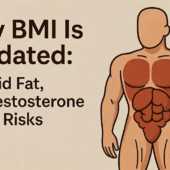
Excess visceral fat suppresses testosterone through aromatase, inflammation, and insulin resistance. Both drugs excel at targeting android fat to potentially raise free T, but disproportionate lean loss can exacerbate low T by reducing muscle androgen signaling and basal metabolic rate. Tirzepatide's data favor better body composition outcomes for hormone-focused care.
Lean Mass in Weight Loss: Why It Matters for Testosterone Optimization
Lean mass (mostly skeletal muscle) drives basal metabolism, insulin sensitivity, and testosterone availability. Significant weight loss without countermeasures can erode 20-40% as lean tissue. For men with low T or visceral fat, preserving lean mass prevents further hormonal decline—muscle supports androgen production and counters estrogen from fat aromatization.
Tirzepatide's SURMOUNT-1 substudy shows ~75% of weight loss as fat mass and ~25% as lean, leading to improved lean mass percentage as fat drops disproportionately—beneficial for testosterone recovery.Retatrutide achieves impressive fat reductions (up to ~26% at higher doses) but with ~33-38% of total weight lost as lean mass—higher than tirzepatide and comparable to or exceeding norms for potent incretins.
Tirzepatide's Superior Lean Mass Preservation
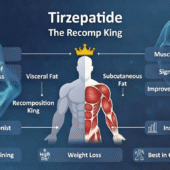
Tirzepatide reduces fat mass by ~33.9% vs placebo's ~8.2%, with lean mass dropping ~10.9%—but the ratio strongly favors fat (~75% fat loss). This often raises lean mass percentage post-treatment, particularly at lower doses where aggressive deficits are avoided, aligning with better muscle retention and metabolic/T support.
Retatrutide's Higher Proportional Lean Mass Loss and No Low-Dose Percentage Gains
In the phase 2 T2D substudy, retatrutide drove fat mass reductions up to 26% but lean mass loss up to ~6.5 kg at higher doses. The proportion of lean to total weight loss was ~33-38%—about 10% higher than tirzepatide's ~25%.
Critically, retatrutide showed no increase in lean mass percentage at lower doses (e.g., 0.5-4 mg). Effects were dose-dependent for absolute loss, but lean proportions stayed consistently higher without relative gains—unlike tirzepatide's favorable shifts.
Implications for Testosterone, Metabolic Health, and Hormone Programs
Both reduce visceral fat—a primary T suppressor—but tirzepatide's lower lean loss ratio better supports muscle, metabolism, and breaking hypogonadism-obesity cycles. Retatrutide's glucagon boost enhances fat oxidation and total loss but risks more muscle erosion, potentially impacting T signaling long-term.
Clinical Take-Home Messages
- Tirzepatide preserves lean mass better (~25% of loss) vs retatrutide (~33-38%, or 10% more lean contribution), often increasing lean percentage—key for testosterone optimization.
- Retatrutide excels in total/fat loss but shows higher proportional lean loss and no lean percentage increase at lower doses.
- Combine either with resistance training, high protein (1.0-1.6 g/kg), and hormone monitoring to protect muscle and maximize T benefits.
- Use DXA/body comp scans over BMI to track visceral fat reduction and lean percentage accurately.
- Focus on fat distribution and hormone balance over total weight for sustainable metabolic and longevity gains.
Your Next Step
At IncreaseMyT, we use tirzepatide in physician-guided programs for fat loss, testosterone restoration, and lean mass protection—while monitoring emerging agents like retatrutide. We prioritize body composition, labs, and resistance protocols over raw weight numbers for peak vitality.
Founder Todd applies decades of science to help men escape low T and visceral fat traps.
Intake FormsKey References & Further Reading:
► Retatrutide phase 2 body composition in T2D (PubMed)
► Tirzepatide fat vs lean loss proportions (PubMed)
► Tirzepatide body composition improvement (PMC)
► Retatrutide lean loss similar to other treatments but higher proportion (Lancet)